Example scenario 2 — Target vessel moving faster than your vessel
Figure 2. Scenario 2 Speed change examples
Note These scenarios are examples provided for guidance
only.
In certain situations, when the target vessel is travelling faster than your vessel, there may be more than one opportunity for your paths to cross within the Intercept distance. If this is the case then a second Interception zone is displayed.
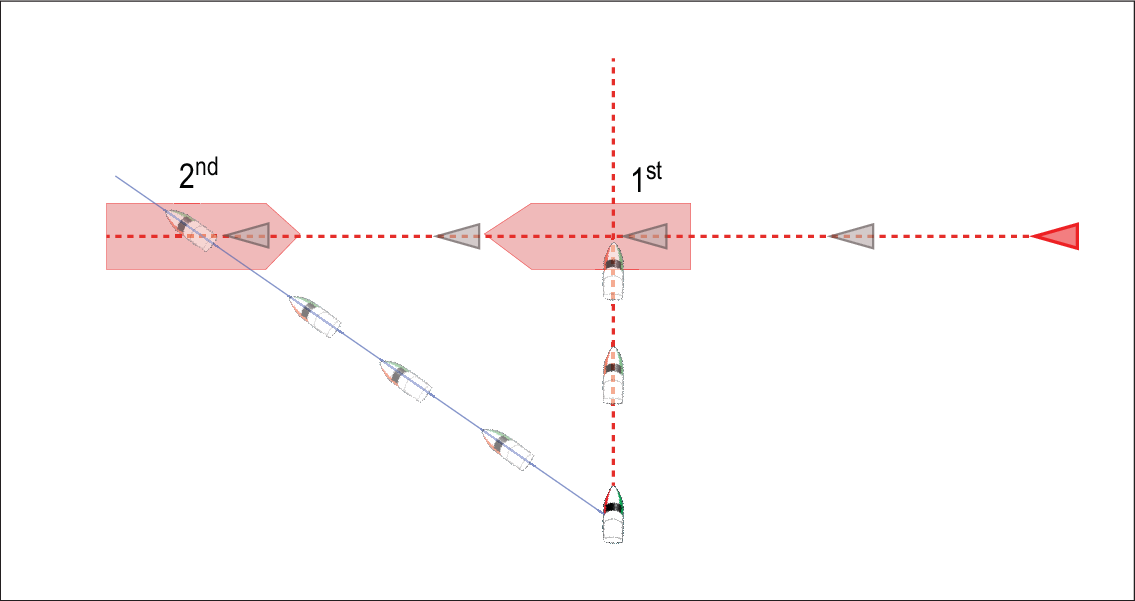
- 1st — The first Interception zone (displayed closest to the target vessel) represents a bow-to-bow collision.
- 2nd — The second Interception zone (displayed farthest from the target vessel) represents the target vessel running you down from behind.
When altering course and speed, both Interception zones must be avoided.
Collision avoidanceCourse change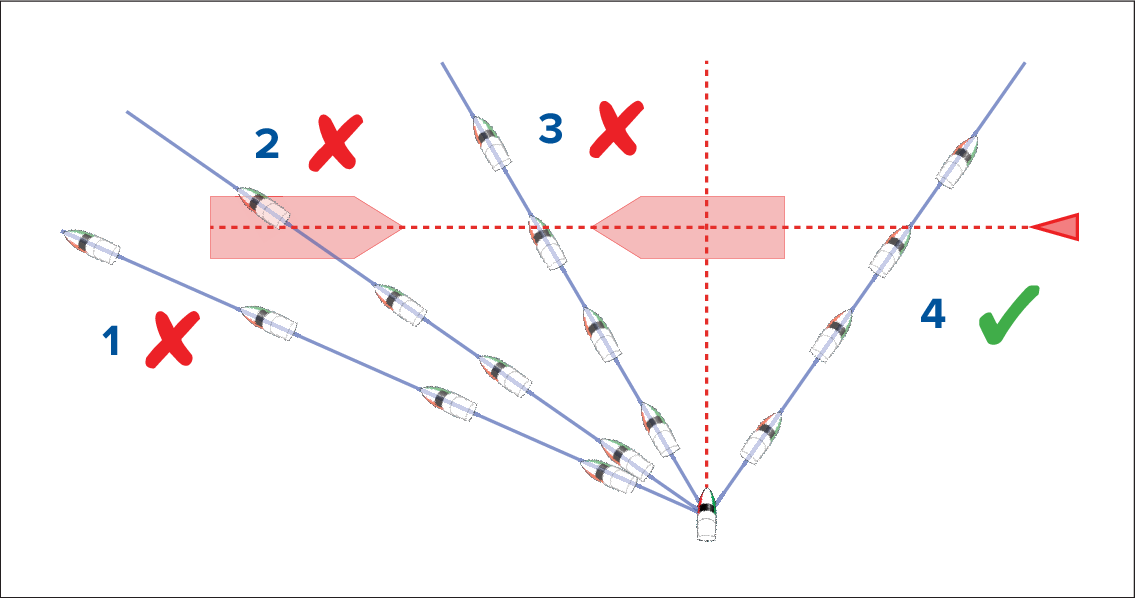
Figure 1. Scenario 2 Course change examples
- Course alteration to pass ahead of the Interception zone [Not recommended] — As the target vessel is moving faster than your vessel you will pass astern of the target.
- Course alteration to pass ahead of the first Interception zone [Not recommended] — Although this course alteration is sufficient to avoid a potential bow-to-bow collision, it has created a second Interception zone where the target may now run you down from behind.
- Course alteration to pass between the 2 Interception zones [Not recommended] — Although this may seem like the quickest option, proceed with caution, as the gap between the 2 Interception zones can close quickly, especially when your vessel slows down.
- Course alteration to clear astern of the target vessel and its Interception zone. This would be the preferred manoeuvre as it correctly alters your vessel’s course so that it is clear of the target’s Interception zone, and passes safely astern of the target. This manoeuvre also clearly indicates to the target vessel your change of course.
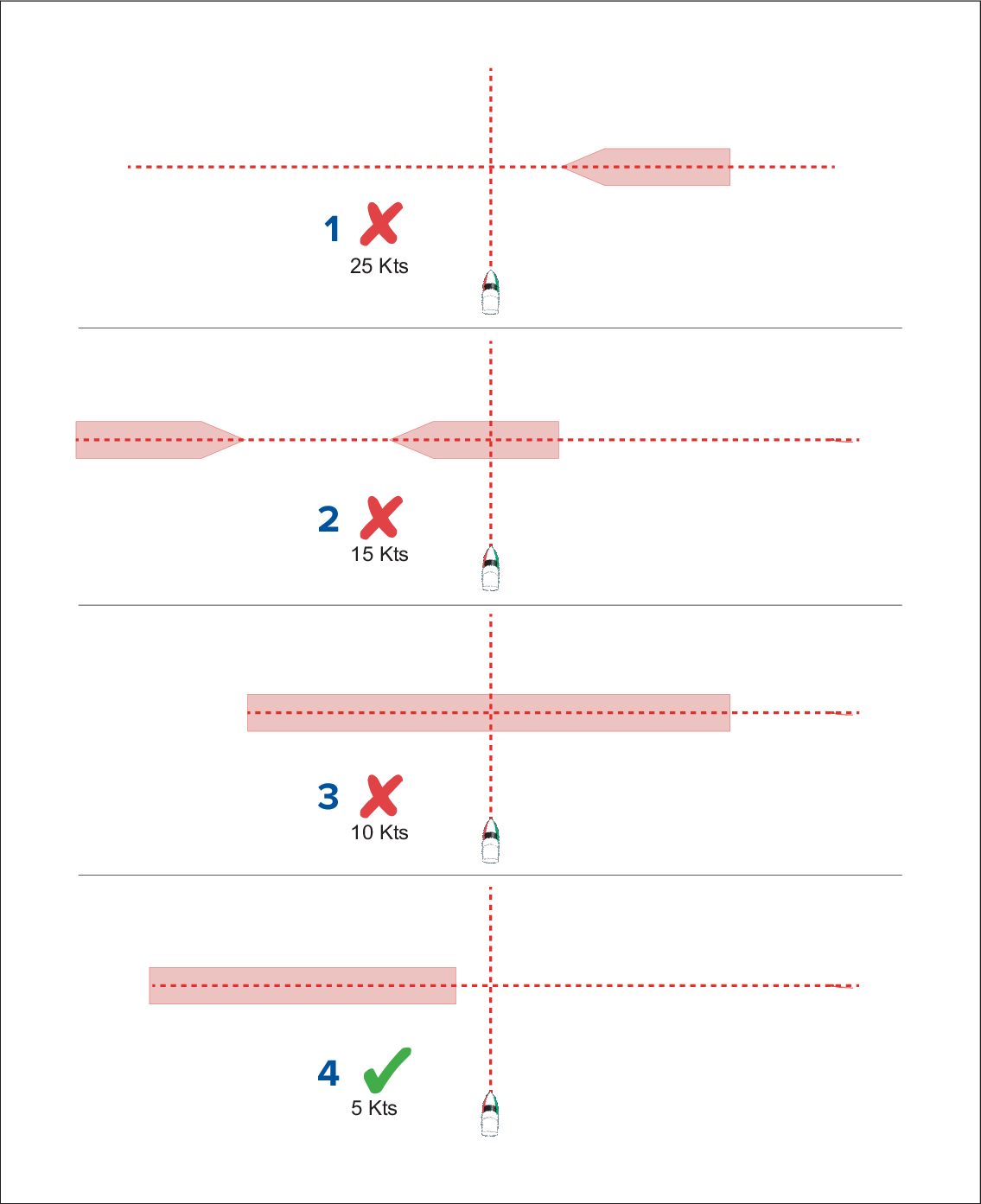
- Speeding up [Not recommended] — Increasing vessel speed to pass ahead of the target vessel. Proceed with caution, there is always an inherent risk when passing in front of other vessels.
- No change [Not recommended] — Not changing speed or course may result in a collision.
- Slowing down [Not recommended] — Slowing down slightly may result in the 2 Interception zones closing up or merging into a single zone.
- Slowing down — Slowing down a sufficient amount will allow the target vessel to pass safely ahead of your vessel, avoiding the Interception zone(s).