Location requirements
Location requirementsGeneral
Optimum transducer location will vary depending on vessel type. Optimum transducer height and angle should be obtained by testing the transducer with the vessel in the water.
The transducer is NOT suitable for mounting on vessels where the transom is aft of the propeller(s).
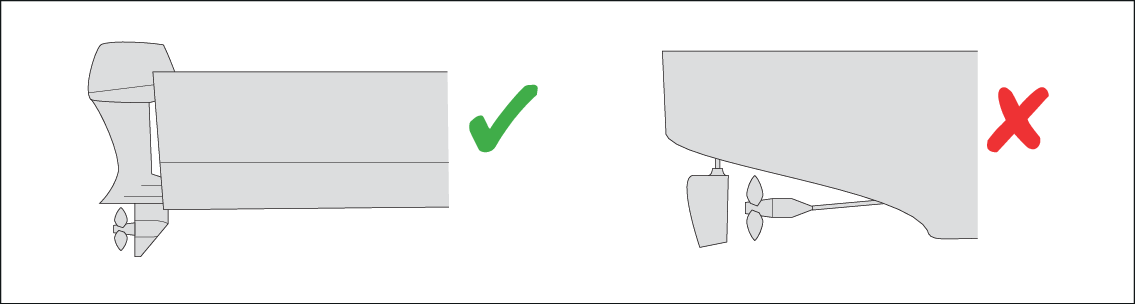
To obtain the best location for your transducer, observe the transom whilst underway. Install in an area away from wake caused by the propeller(s) and where the least amount of turbulence and aeration occurs.
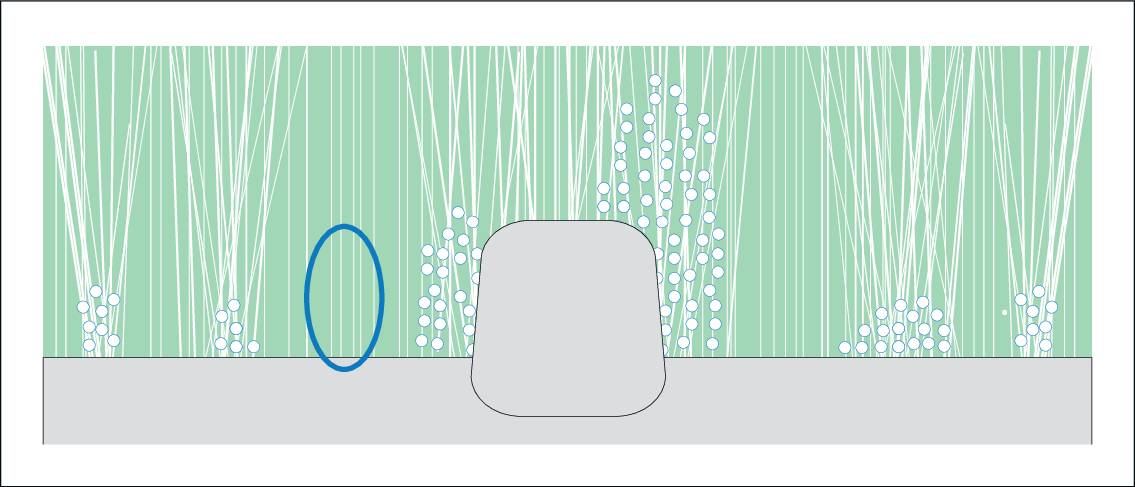
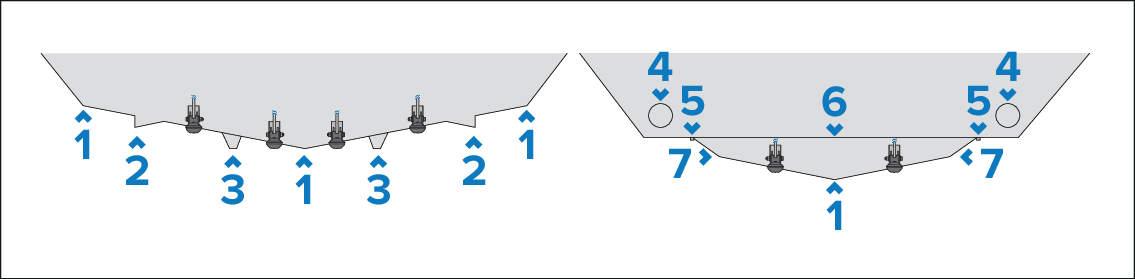
Turbulence can be caused by chines (1), skegs (2), strakes, (3), outlets and exhausts (4), rows of rivets (5) steps (6) and ribs (7). Do NOT install your transducer aft of these locations or in areas of turbulence created by them.
 Note
The illustration above provides potential transducer locations for the hull types depicted. Before selecting a location ensure that all of the location requirements have been met.
The transducer should be mounted as close to the centerline of the vessel as possible, ensuring that:
if the centerline has a chine (is pointed) the transducer is offset.
the transducer remains submerged when planing and turning.
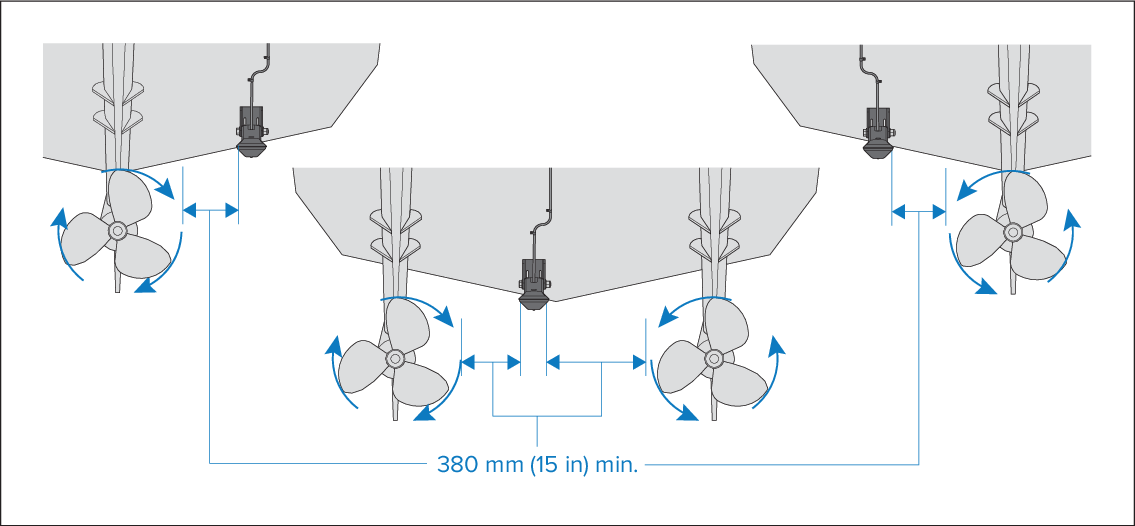
the transducer is a sufficient distance from the propeller(s).
The transducer should be mounted a minimum of 380 mm (15 in) away from the propeller(s). For clockwise rotating propellers, mount the transducer on the starboard side, for counter-clockwise, mount on the port side. On a twin engine vessel mount the transducer close to the centerline or just offset from the centerline.
The transducer should be positioned so that the bottom half of the transducer is lower than the lowest point of the hull in the vicinity of the transducer. In the following illustrations, the dashed line indicates the lowest point of the hull in the vicinity of the transducer.
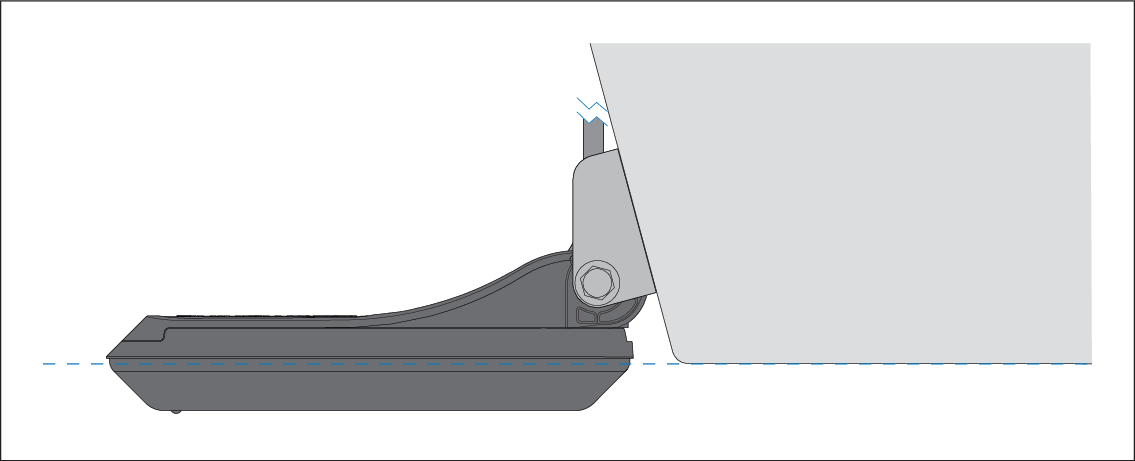
The transducer should also be mounted in a location where no load will be applied to the transducer during launching, lifting, trailering and storage of the vessel.